Katumani Primary School: A Story of Transformation Through Water, Agriculture, and Education
In the arid heart of Kalama sub-county, Machakos County, Katumani Primary School stands as a beacon of hope for its growing population of 420 learners and 15 dedicated teachers. Once plagued by water scarcity and food insecurity, this school has undergone a remarkable transformation through a visionary borehole and farm project launched between 2021 and 2024. Driven by the leadership of head teacher Madam Jane and a powerful partnership between the Church of Jesus Christ of Latter-day Saints (LDS Charities), Riziki Charities, Project Maji, and the KG Foundation, this initiative has addressed critical needs for clean water, nutrition, and education, creating a sustainable model for community empowerment.
The Vision and Initial Assessment (2021–2023)
In 2021, Madam Jane, inspired by a successful borehole project at Kwa Katheke, recognized the urgent need for clean water to address health risks and enhance the learning environment for the school’s then-264 learners. The reliance on purchased, often contaminated water was inadequate, posing health risks and straining resources. Madam Jane collaborated with the KG Foundation to initiate a borehole assessment on the school’s 12-acre plot. Conducted between 2021 and 2023, the assessment confirmed the feasibility of a borehole with a capacity of 8 cubic meters (CBM), sufficient to serve both the school and the surrounding community. This laid the foundation for a transformative project that would address water scarcity, food insecurity, and educational challenges.
Collaborative Construction and Implementation (2024)
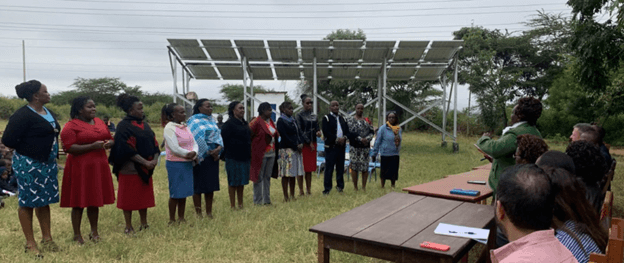
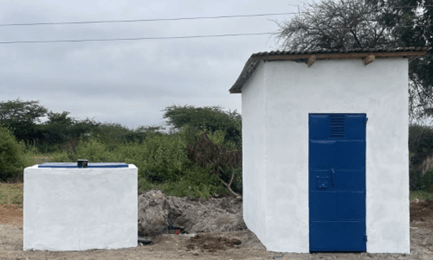
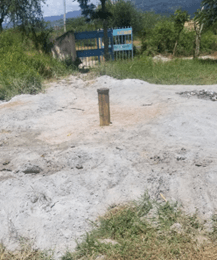
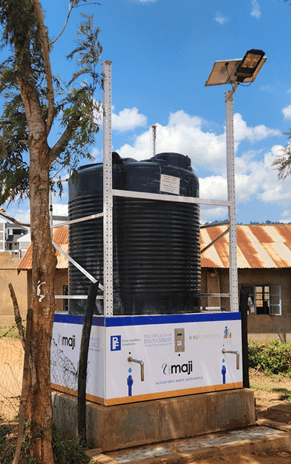
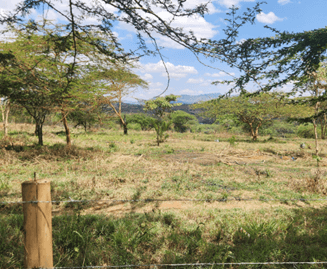
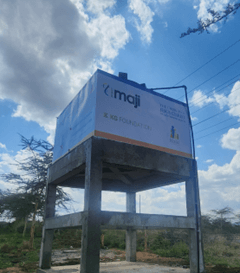
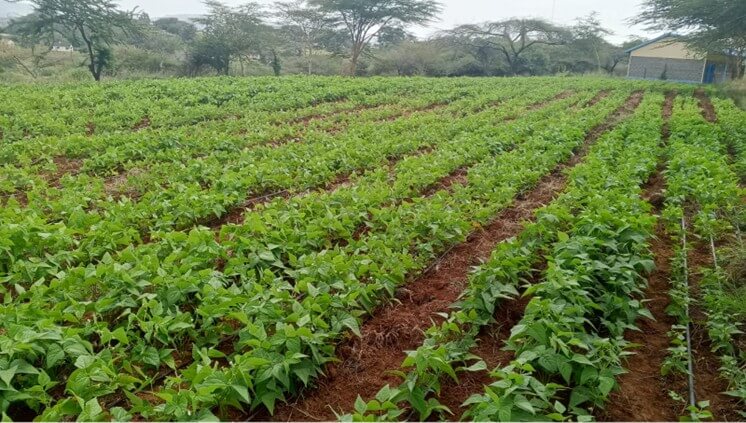
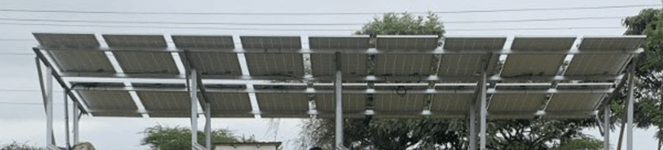
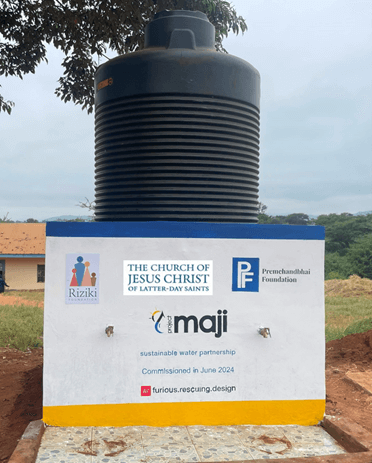
In 2024, LDS Charities, Riziki Charities, and Project Maji joined forces with the KG Foundation to fund and construct a solar-powered borehole at Katumani Primary School. The borehole, equipped with a pump, solar system, and filtration system, ensures a sustainable and eco-friendly supply of clean water for drinking, hygiene, and irrigation. Water towers were installed to store and distribute water efficiently, supporting both the school and a 6-acre farm envisioned by Madam Jane to combat learner hunger. A drip irrigation system, implemented with support from the KG Foundation and Riziki Charities, optimized water use for crop cultivation. Parents played a crucial role by clearing land for the farm, fostering a sense of community ownership.
Two water access points were established: one dedicated to the school, ensuring learners have consistent access to safe water, and a community water kiosk, managed by Project Maji, offering clean water at 2.5 KSH per 20-liter jerrican. This affordable pricing model generates revenue to cover maintenance costs, ensuring the project’s long-term sustainability.
The School Farm: Nourishing Bodies and Minds
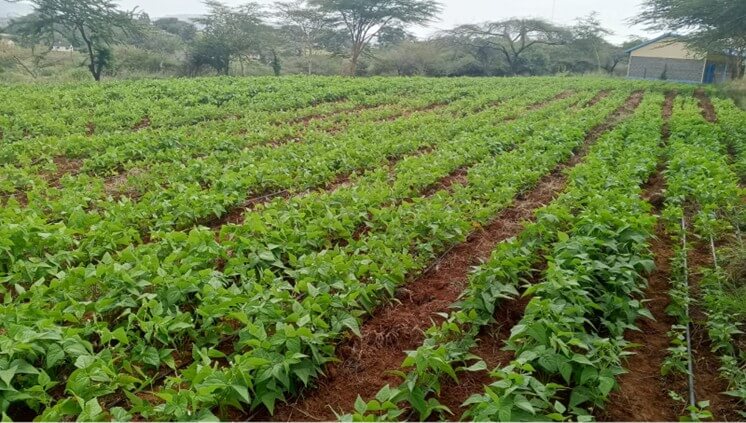
With a reliable water supply, the 6-acre school farm has become a cornerstone of the project. The farm’s first harvest yielded 270 kilograms of beans, supplemented by rice donations from parents, significantly enhancing the school’s feeding program. A subsequent maize harvest further bolstered nutrition, reducing food insecurity and improving students’ focus on learning. The farm also serves as an educational tool, aligning with Kenya’s Competency-Based Curriculum (CBC) by teaching students practical agricultural and sustainability skills vital for the arid region.
A Ceremony of Gratitude
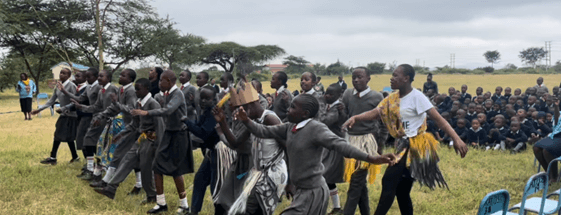
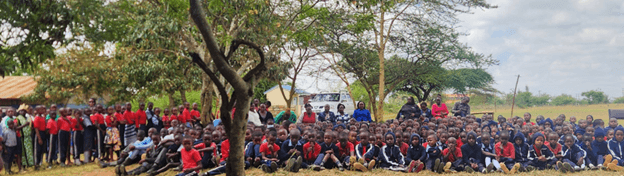
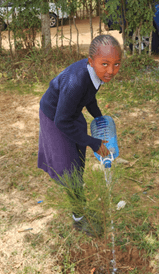
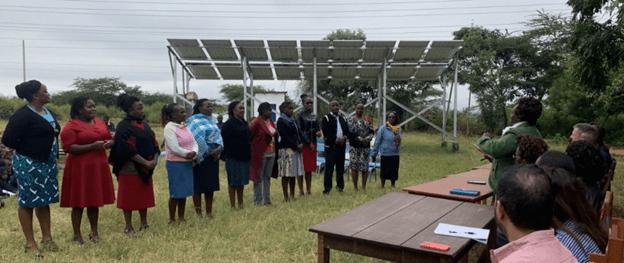
The project’s completion was celebrated with a heartfelt handover ceremony in 2024. In a symbolic gesture of gratitude and environmental commitment, the school planted fruit trees to honor the donors and the transformative impact of the borehole and farm. Learners have taken responsibility for watering and nurturing these trees, ensuring they thrive as a living legacy of hope and opportunity.s practical agricultural and sustainability skills vital for the arid region.
Infrastructure Upgrades: Building for the Future
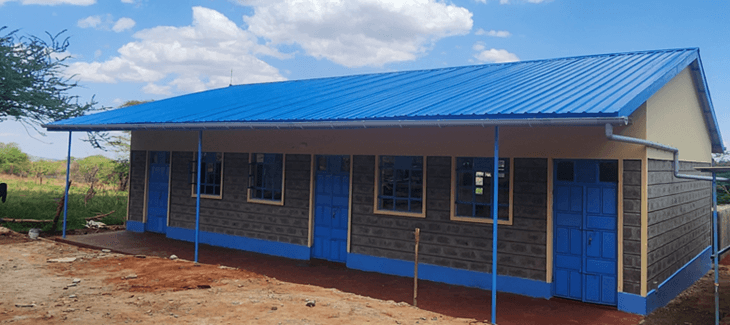
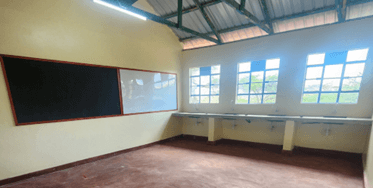
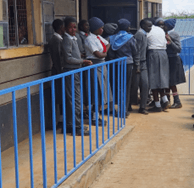
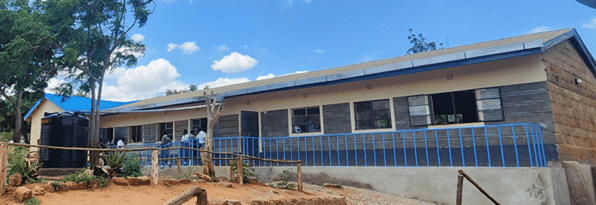
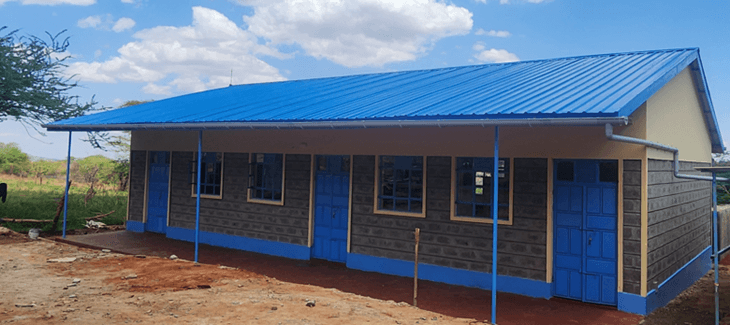
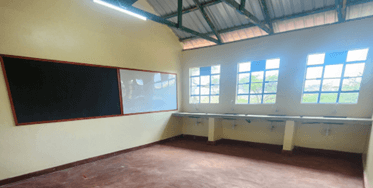
The success of the water and farm initiatives spurred further improvements to accommodate the school’s growth, with enrollment rising from 264 to 420 learners and academic performance improving. To address a classroom shortage, particularly for Grade 9 students, Madam Jane partnered with Riziki Charities to construct a new classroom equipped with a ramp for accessibility and a science laboratory, the only one in the area. Parents in collaboration with KG Foundation contributed to equipping the lab, recognizing its importance for their children’s education. Additional upgrades included an enhanced Early Childhood Development (ECD) classroom with railings and a disabled ramp, ensuring inclusivity for all learners. The community also united to build a gate, improving the school’s appearance and security.
Impact and Sustainability
The Katumani Primary School project has transformed lives in Kalama sub-county. The solarized borehole provides clean water, eliminating the need for long treks to contaminated riverbeds and reducing health risks for learners and the community. The farm ensures nutritious meals, improving student health and academic performance while generating income through water sales to sustain the project. The infrastructure upgrades, including accessible classrooms and a science lab, have created a conducive learning environment, empowering students for a brighter future. By integrating agricultural education into the CBC, the project equips learners with skills to thrive in their arid environment.
A Model for Resilience
The collaborative efforts of Madam Jane, LDS Charities, Riziki Charities, Project Maji, the KG Foundation, and the community have turned Katumani Primary School into a model of resilience and self-sufficiency. This initiative has not only addressed immediate needs for water, food, and education but also planted the seeds for long-term growth, environmental stewardship, and community empowerment in Kalama sub-county. As the school continues to thrive, it stands as a testament to the power of vision, partnership, and collective action in transforming lives.
More prroject Picture